
St Andrew’s Cathedral

St Andrew’s Cathedral in Sydney stands as one of Australia’s most significant ecclesiastical landmarks, embodying the rich architectural and spiritual heritage of churches in Australia. As the oldest cathedral in the country, its Gothic Revival design, crafted from locally quarried sandstone, reflects both the colonial aspirations of the 19th century and the enduring presence of Anglican worship in the nation. Located in the heart of Sydney’s central business district, the cathedral serves not only as a place of religious devotion but also as a symbol of historical continuity amidst the city’s rapid modernisation.
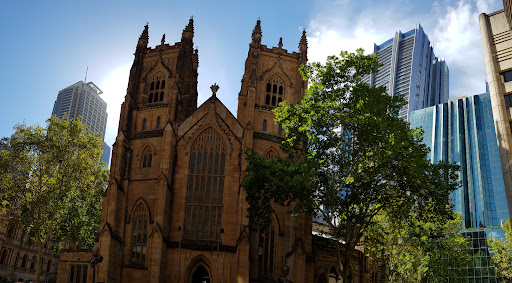
Cnr of George and, Bathurst St, Sydney NSW 2000, Australia
+61 2 9265 1661
Located at the historic heart of Sydney, St Andrew’s Cathedral stands as a striking example of Gothic Revival architecture, seamlessly blending spiritual significance with cultural heritage. Situated at the corner of George and Bathurst Streets, this architectural gem offers visitors a serene retreat from the urban rhythm, while maintaining accessibility and prominence within the city’s central business district. With its impeccable acoustics, regular choral services, and community outreach programmes, the cathedral serves not only as a place of worship but as a dynamic cultural venue. Easily reachable by public transport and welcoming to all, St Andrew’s Cathedral enhances Sydney’s identity through enduring elegance and community engagement. For further details, visit www.sydneycathedral.com or call +61 2 9265 1661.
| Friday | 10 AM–4 PM |
| Saturday | Closed |
| Sunday | 8:30 AM–6 PM |
| Monday | 10 AM–4 PM |
| Tuesday | 10 AM–3 PM |
| Wednesday | 10 AM–3 PM |
| Thursday | 10 AM–4 PM |
More information
What is the historical significance of St Andrew’s Cathedral in Sydney?
St Andrew’s Cathedral holds a distinguished place as the oldest cathedral in Australia, with its foundation stone laid in 1837 and consecration completed in 1868. Designed by the renowned architect Edmund Blacket, the cathedral exemplifies Gothic Revival architecture with its pointed arches, intricate stone carvings, and majestic spire. Located at the corner of George and Bathurst Streets, it has served as a spiritual and civic landmark throughout Sydney’s development, bearing witness to key national events and royal visits.
How does St Andrew’s Cathedral contribute to religious life in Australia?
As the principal church of the Anglican Diocese of Sydney, St Andrew’s Cathedral plays a central role in the spiritual life of the city, offering regular services, prayers, and sacraments in a tradition rooted in liturgical worship. It hosts significant diocesan events, including ordinations and civic services, reinforcing its function as both a place of worship and a venue for community engagement. Its active choir and music programme further enrich the religious experience with choral excellence and sacred music.
Is St Andrew’s Cathedral open to visitors and tourists?
Yes, St Andrew’s Cathedral warmly welcomes visitors from around the world, maintaining regular opening hours that allow access to its serene interior, stained-glass windows, and historic memorials. Located at Cnr George and Bathurst Streets, the cathedral provides an atmosphere of contemplation amidst the bustle of central Sydney. Information about tours, quiet reflection, and upcoming events can be found on the official website at www.sydneycathedral.com, and inquiries are handled via phone at +61 2 9265 1661.
What makes St Andrew’s Cathedral stand out among churches in Australia?
St Andrew’s Cathedral distinguishes itself through its architectural grandeur, historical continuity, and enduring presence in the nation’s religious landscape. With a rating of 4.6 from visitors, it is consistently praised for its peaceful ambiance, beauty, and accessibility. Unlike many modern religious buildings, it retains original Victorian-era features and craftsmanship, offering an authentic glimpse into Australia’s ecclesiastical heritage while remaining a living, active cathedral.