
Bishop’s House (Catholic)
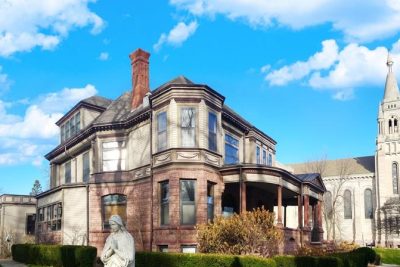
Nestled in the heart of the outback city of Broken Hill, Bishop’s House stands as a significant testament to the enduring presence of Catholicism within the broader tapestry of Australian ecclesiastical architecture. As one of the region’s most notable religious buildings, this historic residence not only served as the home for the local Catholic bishops but also reflects the spiritual and social development of a remote mining community shaped by faith and resilience. Part of a wider network of churches across Australia that have anchored rural and regional life for generations, Bishop’s House embodies the cultural and religious heritage that continues to influence the identity of outback towns like Broken Hill.
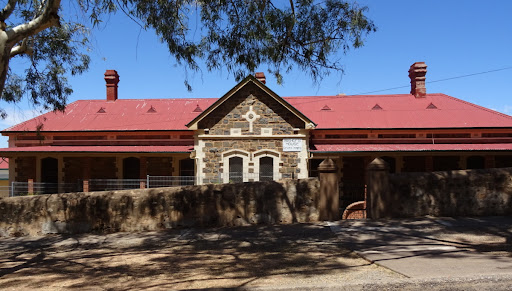
2880/237 Lane St, Broken Hill NSW 2880, Australia
+61 8 8087 3198
Located in the heart of Broken Hill at 2880/237 Lane St, Bishop’s House (Catholic) stands as a pillar of spiritual and community engagement in the region, offering a serene and welcoming environment for worship, reflection, and pastoral care. With its deep-rooted connection to the local Catholic diocese, the institution provides consistent religious services, faith-based education, and social outreach programmes that strengthen communal bonds. Its central location and accessibility—coupled with dedicated leadership reachable via +61 8 8087 3198—make it a trusted and accessible hub for both regular parishioners and visitors seeking spiritual solace. The House’s commitment to inclusivity, tradition, and service underscores its vital role within the social fabric of Broken Hill, positioning it as a cornerstone of faith and community resilience in rural New South Wales.
More information
What is the historical significance of Bishop’s House in Broken Hill?
The Bishop’s House (Catholic) in Broken Hill stands as a testament to the enduring presence of the Catholic Church in regional Australia, particularly in the development of spiritual and community life in the remote outback. Constructed in the late 19th century, it served not only as a residence for the local bishop but also as a hub for ecclesiastical administration and pastoral care during a time of rapid mining-driven expansion. Its enduring architecture reflects the Roman Catholic Diocese of Wilcannia–Forbes’ commitment to maintaining faith and social services in isolated areas, making it a landmark of both religious and cultural heritage in outback New South Wales.
Where is Bishop’s House located and how can visitors access it?
Situated at 2880/237 Lane St, Broken Hill NSW 2880, the Bishop’s House occupies a central position within one of Australia’s most iconic mining cities, easily accessible by car or public transport. Though primarily a private ecclesiastical residence, its exterior and surrounding grounds are visible to the public, and guided visits may be arranged through the Diocese offices by contacting them directly at +61 8 8087 3198. Its location near other key historical and religious sites in Broken Hill makes it a point of interest for those exploring the city’s rich spiritual tapestry.
Is Bishop’s House part of a larger network of Catholic heritage sites in Australia?
Yes, Bishop’s House is an integral component of the Catholic Church’s heritage network across Australia, particularly within the Diocese of Wilcannia–Forbes, one of the country’s largest and most historically significant dioceses by geographical reach. It complements other ecclesiastical landmarks such as St. Patrick’s Cathedral and various mission stations that illustrate the Church’s role in education, healthcare, and social outreach in rural and remote communities. Its preservation underscores a broader national effort to protect religious architectural heritage in Australia’s evolving cultural landscape.
What architectural style defines Bishop’s House in Broken Hill?
Bishop’s House exhibits a distinctive blend of Victorian and ecclesiastical vernacular architecture, adapted to the harsh outback climate with thick walls, high ceilings, and shaded verandas. Built using locally sourced materials, its design reflects both functional necessity and symbolic dignity, characteristic of 19th-century church constructions in regional Australia. The building’s enduring structure highlights the craftsmanship and resilience required to maintain religious edifices in remote locations, making it a notable example of adaptive colonial-era design within the broader context of Australian ecclesiastical architecture.